

PINNACLE ESTIMATING SERVICES | NOVEMBER 2026
Why Human Estimating Expertise Matters More Than Ever
November 2026 trends for flooring, paint, drywall, stone, countertops, roofing and other specialty trades

The strongest bids begin with current documents and end with experienced human review
The U.S. construction market is sending specialty contractors two messages at once. Nonresidential spending increased 0.6 percent in September and contractor backlog reached 8.7 months, supported by data-center and commercial work. Yet total construction spending fell 1.9 percent for the month, input costs for new nonresidential construction were 11.9 percent higher than a year earlier, and more than one in four contractors expected margins to contract over the next six months. [1] [2] [3]
That combination creates opportunity, but it also raises the cost of a missed scope item, a stale assumption or a slow response to an addendum. Producing a takeoff quickly is not enough. The advantage comes from experienced estimators who understand how drawings, specifications, details and revisions work together—and who know when a condition requires judgment instead of an automated answer.
The market is active but increasingly selective
September data show why subcontractors need both speed and discipline. ABC reported 8.7 months of backlog, up 0.2 months from August and from a year earlier. The 15 percent of surveyed contractors working on data centers averaged 11.3 months of backlog, three months more than contractors without data-center work. At the same time, expectations for sales and profit margins weakened. [2]
The broader spending picture is uneven. Total U.S. construction spending was running at a seasonally adjusted annual rate of $2.186 trillion in September, down 1.9 percent from August and 2.7 percent from a year earlier. However, ABC reported that nonresidential spending increased 0.6 percent for the month to $1.325 trillion. [1]
| Current signal | Latest reading | Why it matters to subcontractors |
|---|---|---|
| Construction backlog | 8.7 months | Work remains available, but opportunity is concentrated by market and contractor size. |
| Total construction spending | $2.186 trillion | The 1.9 percent monthly decline reinforces the need for disciplined bid selection. |
| Nonresidential input costs | +11.9 percent | Quotes, escalation assumptions and material lead times can change a bid quickly. |
| Craft hiring pressure | 88 percent | Among firms with craft openings, 88 percent said positions were as hard or harder to fill than a year earlier. |
| Construction AI investment | 61 percent | Investment shows interest, but current AI does not replace professional plan review, takeoffs or accountability. |
Labor pressure adds another layer. AGC found that 87 percent of respondents had openings for hourly craft positions and that half of firms said available candidates lacked needed skills, certificates or licenses. BLS reported that nonresidential specialty-trade employment continued to trend upward in September, adding 12,000 jobs. [4] [5] The practical answer is not to chase every project. It is to use estimating capacity where the company has the clearest scope, strongest relationships and best ability to execute.
AI investment is increasing, but investment should not be mistaken for maturity. AGC’s 2026 outlook found that 61 percent of firms used AI or planned to increase investment, including 23 percent using it for estimating and 20 percent for design or preconstruction. [6] Those figures show industry interest—not that autonomous plan review or takeoff is ready to replace a trained estimator.
AI is evolving, but construction judgment is not automated
Current construction AI can help organize documents, retrieve text and highlight possible differences. Those are useful support functions, but they are not the same as understanding construction intent. Plans communicate through graphics, dimensions, details, schedules, notes and conventions that vary by designer, project and trade. Today’s systems can miss context, misread a condition or produce a confident response that is incomplete.
In October, Trimble announced drawing-review capabilities intended to analyze drawings with contracts and specifications, while Procore introduced a voice-first field application for questions against project documents. [7] [8] These releases show where vendors are investing, but they remain assistance tools. They do not establish that software can independently interpret a full bid set, complete a reliable trade takeoff or accept responsibility for a scope decision.
Estimating risk rarely lives in one location. A floor finish may be shown on a room schedule but modified by an interior detail. A drywall requirement may appear in a wall-type legend, a fire-rating note and an addendum. A countertop cutout may be visible in an equipment plan but absent from an architectural elevation. A roofing allowance may be affected by details, penetrations, insulation requirements and access conditions. Recognizing those relationships takes trade knowledge and a human understanding of how the work will actually be built.
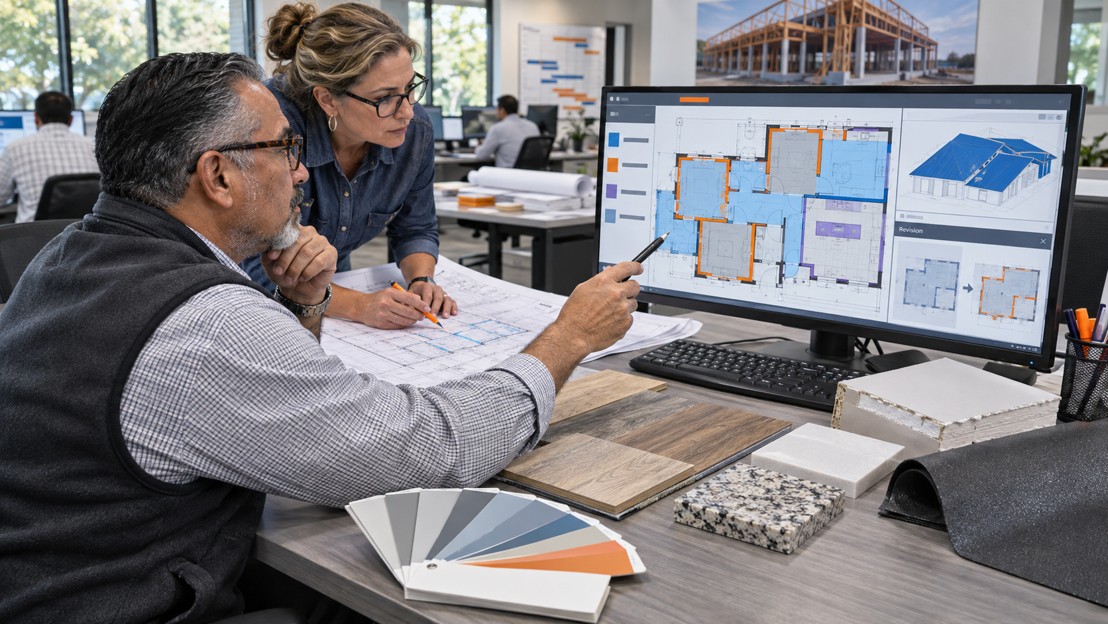
Technology may organize information, but experienced estimators must interpret plans and verify every quantity
The maturity level is not yet sufficient for contractors to rely on AI as an estimator. Software may assist with narrow administrative tasks, but every quantity, assembly, inclusion, exclusion and assumption still needs human validation. No automated system can replace the trained mind that connects trade knowledge, customer standards, measurement rules, constructability, waste, access and risk—or the professional accountability behind the final estimate.
The human estimating process that protects a bid
A dependable estimate is built through a disciplined human process. Technology can support the workflow, but experienced estimators remain responsible for interpreting the documents, measuring the work and reviewing the result.
1. Control the bid package. Begin with the latest drawings, specifications, addenda, alternates, bid forms and scope instructions. An estimator confirms the current set before measuring so superseded information does not enter the takeoff.
2. Read the plans as a construction professional. Review plans, schedules, sections, details and specifications together. Follow scope across disciplines and revisions, identify conflicts and record questions that require clarification.
3. Complete the trade takeoff with human judgment. Measure the work, apply assemblies, waste, labor and equipment assumptions, and record what is included. Resolve ambiguous conditions through experience or raise them for clarification.
4. Review the estimate before delivery. Check drawing coverage, units, alternates, exclusions, pricing dates and addenda. Pinnacle’s Quality-Driven Estimation process adds structured human review because a polished spreadsheet is only valuable when the reasoning behind it is sound.
5. Communicate the scope clearly. Provide organized quantities, area breakdowns, assumptions and outstanding questions so pricing, purchasing, project management and field leaders understand how the bid was built.
6. Apply feedback to the next estimate. Compare estimated quantities with purchases, labor, waste, changes and rework. Experienced people turn those results into better checklists, production assumptions and customer-specific standards.
Trade specific opportunities and risks
Every trade carries different scope boundaries and measurement risks. The value comes from estimators who know where to look, what to question and how the work will be installed.
| Trade | Where experienced estimators add value | Critical scope decisions requiring human judgment |
|---|---|---|
| Flooring | Reconcile finish plans, room schedules, details and addenda; organize quantities by material, room and phase. | Substrate conditions, moisture mitigation, transitions, patterns, waste, attic stock and access. |
| Paint | Interpret finish codes, wall and ceiling types, elevations, details and revision changes. | Surface preparation, number of coats, specialty coatings, heights, lifts, protection and phasing. |
| Drywall | Connect wall-type legends, plans, sections, rated assemblies and reflected ceiling plans. | Layers, heights, insulation, fire and sound requirements, soffits, shafts, penetrations and alternates. |
| Stone and countertops | Cross-check plans, elevations, room schedules and equipment cutouts; organize lengths and areas. | Slab yield, seams, edge profiles, backsplashes, cutouts, templating, waste and lead times. |
| Roofing | Reconcile roof plans, details, schedules and addenda; identify zones, curbs and penetrations. | Tear-off, substrate repair, tapered insulation, flashing, access, safety, warranties and manufacturer rules. |
| Other specialty trades | Trace scope across documents, identify coordination boundaries and record questions consistently. | Trade-specific assemblies, exclusions, constructability, field conditions and customer preferences. |
Why AI cannot replace a professional estimator
1. Drawings communicate visually. Scope is expressed through plans, symbols, dimensions, details, schedules and graphic relationships that cannot be reduced reliably to text retrieval.
2. Scope crosses documents. Requirements may be split among architectural, structural, mechanical and interior sheets, specifications, addenda and bid instructions. A trained estimator follows the entire chain.
3. Takeoffs require trade knowledge. Assemblies, waste, substrate conditions, access, phasing, coordination boundaries and customer preferences require experience, not pattern matching alone.
4. Automated output can be confidently wrong. AI may omit context or misinterpret an unusual condition without recognizing the risk. It cannot ask every necessary question or own the consequences of a missed scope item.
5. Quality depends on accountable review. Professional estimators can explain their assumptions, respond to customer feedback and improve from completed work. That human accountability is central to bid confidence.
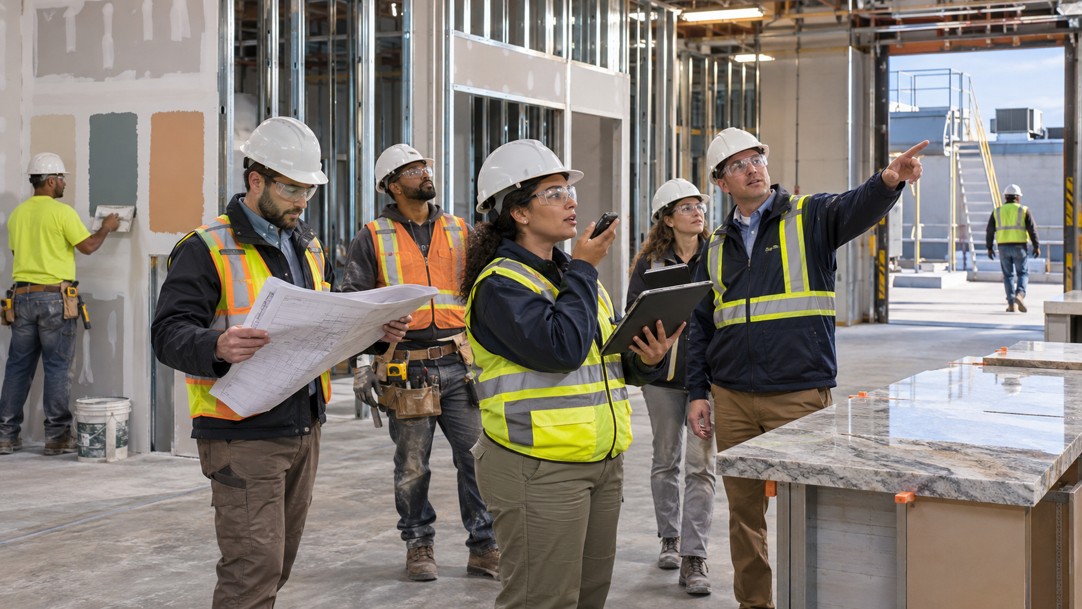
Field knowledge becomes more valuable when experienced estimators apply it to the next bid
Why the right estimating partner matters more than ever
New software can move information faster, but speed does not equal accuracy. Subcontractors still need people who understand the trade, interpret the requested scope, follow customer standards, communicate questions and review the completed work. When the bid carries real cost and risk, nothing replaces the human mind evaluating the plans and standing behind the takeoff.
Pinnacle Estimating Services provides professional quantity takeoffs and estimating support for commercial and residential subcontractors. Our trained teams support flooring, paint, drywall, stone and countertops, roofing, architectural millwork, Divisions 8 and 10, glass and glazing, rough carpentry, acoustical ceilings and related scopes. Pinnacle works in the customer’s preferred software and uses its Quality-Driven Estimation process to combine trade experience, structured human review and consistent deliverables. A U.S.-based account-management team remains available for coordination and follow-up. [9]
The scale behind that service matters. Pinnacle reports more than 59,000 completed projects and more than 5 billion square feet of work since entering the market in 2016. [9] That experience gives customers flexible estimating capacity without requiring every increase in bid volume to become permanent internal overhead.
A practical way to start
Choose one upcoming project and send Pinnacle the current plans, specifications, addenda, scope instructions, deadline, software preference and desired output. Identify any areas where revisions, unusual assemblies, alternates or phasing create added risk. A Pinnacle estimator will review the bid set, complete the trade takeoff and deliver an organized estimate backed by human quality control. After delivery, your team can review the assumptions and return useful field or purchasing feedback after award.
Technology may support parts of the workflow, but it should never be the estimator. The goal is a dependable bid built from current information, experienced trade judgment, careful takeoffs, consistent human quality control and professional accountability.
Ready to increase bid capacity without sacrificing human expertise
Discuss your trade bid volume and estimating workflow with Pinnacle Estimating Services. Visit www.pinnacle-cst.com
Accurate Estimates Stronger Projects
Sources
- U.S. Census Bureau – Monthly Construction Spending September 2026. Source
- Associated Builders and Contractors – Construction Backlog Indicator September 2026. Source
- Associated General Contractors of America – Construction input costs September 2026. Source
- Associated General Contractors of America and NCCER – 2026 Workforce Survey. Source
- U.S. Bureau of Labor Statistics – Employment Situation September 2026. Source
- Associated General Contractors of America – 2026 Construction Hiring and Business Outlook. Source
- Trimble – Drawing based construction risk intelligence October 21 2026. Source
- Procore – Voice first AI mobile app October 21 2026. Source
- Pinnacle Estimating Services – Company services process and experience. Source
Data current as of November 2 2026. Images are AI-generated illustrations and do not depict actual Pinnacle employees or customer projects.