

In today’s construction market, contractors are operating in an environment defined by speed, competition, and margin pressure. Opportunities are increasing across commercial, residential, and renovation sectors, yet the ability to respond effectively is becoming more challenging. Contractors are expected to submit more bids, respond faster, and provide greater detail—all while maintaining profitability.
This creates a fundamental tension between bid volume and accuracy. Increasing one often compromises the other. However, in 2026, the most successful contractors are no longer treating this as a trade-off. Instead, they are adopting strategies that allow them to scale both simultaneously—without expanding internal teams.
This shift is redefining how estimating functions operate and how companies position themselves for growth.
 Construction demand continues to evolve, with more opportunities driven by renovation cycles, infrastructure spending, and private sector investment. At the same time, project owners and general contractors are issuing more bid requests, often with shorter response timelines.
Contractors who can respond quickly and consistently are gaining a competitive advantage. However, increasing bid volume is not simply about submitting more proposals—it requires maintaining a level of quality and accuracy that builds confidence with clients.
The challenge is that most internal estimating teams are not structured to handle this increase without strain.
Construction demand continues to evolve, with more opportunities driven by renovation cycles, infrastructure spending, and private sector investment. At the same time, project owners and general contractors are issuing more bid requests, often with shorter response timelines.
Contractors who can respond quickly and consistently are gaining a competitive advantage. However, increasing bid volume is not simply about submitting more proposals—it requires maintaining a level of quality and accuracy that builds confidence with clients.
The challenge is that most internal estimating teams are not structured to handle this increase without strain.
 Estimating teams today are frequently operating at or beyond capacity. As bid requests increase, estimators must manage multiple deadlines, review complex drawings, and coordinate with internal stakeholders—all within compressed timeframes.
This leads to several operational challenges:
Estimating teams today are frequently operating at or beyond capacity. As bid requests increase, estimators must manage multiple deadlines, review complex drawings, and coordinate with internal stakeholders—all within compressed timeframes.
This leads to several operational challenges:
 Hiring additional estimators may appear to be a straightforward solution, but it introduces long-term complexity. Increasing headcount brings fixed overhead costs, onboarding timelines, and variability in performance.
More importantly, scaling internally lacks flexibility. Workload in construction is rarely consistent—periods of high demand are often followed by slow cycles. Maintaining a larger team during low periods reduces efficiency and profitability.
This makes traditional scaling models increasingly difficult to sustain in today’s market.
Hiring additional estimators may appear to be a straightforward solution, but it introduces long-term complexity. Increasing headcount brings fixed overhead costs, onboarding timelines, and variability in performance.
More importantly, scaling internally lacks flexibility. Workload in construction is rarely consistent—periods of high demand are often followed by slow cycles. Maintaining a larger team during low periods reduces efficiency and profitability.
This makes traditional scaling models increasingly difficult to sustain in today’s market.
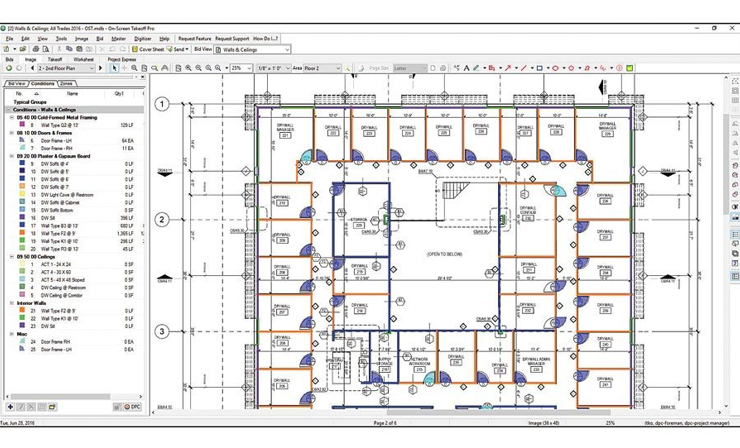 While increasing bid volume is important, accuracy remains the foundation of successful projects. Inaccurate quantity takeoffs can create issues that extend far beyond the estimating phase.
Common impacts include:
While increasing bid volume is important, accuracy remains the foundation of successful projects. Inaccurate quantity takeoffs can create issues that extend far beyond the estimating phase.
Common impacts include:
 Pinnacle Estimation Services provides specialized quantity takeoffs for flooring, drywall, paint, stone, and countertops. By focusing exclusively on quantities, Pinnacle ensures a high level of accuracy and consistency across every project.
Contractors working with Pinnacle benefit from:
Pinnacle Estimation Services provides specialized quantity takeoffs for flooring, drywall, paint, stone, and countertops. By focusing exclusively on quantities, Pinnacle ensures a high level of accuracy and consistency across every project.
Contractors working with Pinnacle benefit from:
 Accurate quantity takeoffs do more than support bidding—they improve outcomes across the entire project lifecycle. From procurement to installation, reliable data enables better planning, coordination, and execution.
Benefits include:
Accurate quantity takeoffs do more than support bidding—they improve outcomes across the entire project lifecycle. From procurement to installation, reliable data enables better planning, coordination, and execution.
Benefits include:
 As the construction industry continues to evolve, contractors who can balance speed and accuracy will lead the market. Scaling operations will no longer depend on increasing headcount but on improving processes and leveraging strategic partnerships.
The ability to respond quickly, deliver accurate data, and manage multiple opportunities simultaneously will define success in the coming years.
Pinnacle Estimation Services is positioned to support this transformation—helping contractors scale with confidence, precision, and efficiency.
Partner with Pinnacle Estimation Services to enhance your estimating capabilities and position your business for sustainable growth.
As the construction industry continues to evolve, contractors who can balance speed and accuracy will lead the market. Scaling operations will no longer depend on increasing headcount but on improving processes and leveraging strategic partnerships.
The ability to respond quickly, deliver accurate data, and manage multiple opportunities simultaneously will define success in the coming years.
Pinnacle Estimation Services is positioned to support this transformation—helping contractors scale with confidence, precision, and efficiency.
Partner with Pinnacle Estimation Services to enhance your estimating capabilities and position your business for sustainable growth.
The Growing Demand for Higher Bid Volume
Construction demand continues to evolve, with more opportunities driven by renovation cycles, infrastructure spending, and private sector investment. At the same time, project owners and general contractors are issuing more bid requests, often with shorter response timelines.
Contractors who can respond quickly and consistently are gaining a competitive advantage. However, increasing bid volume is not simply about submitting more proposals—it requires maintaining a level of quality and accuracy that builds confidence with clients.
The challenge is that most internal estimating teams are not structured to handle this increase without strain.
Internal Estimating Bottlenecks
Estimating teams today are frequently operating at or beyond capacity. As bid requests increase, estimators must manage multiple deadlines, review complex drawings, and coordinate with internal stakeholders—all within compressed timeframes.
This leads to several operational challenges:
- • Rushed quantity takeoffs
- • Missed details in plans and specifications
- • Inconsistent outputs across estimators
- • Reduced time for validation and review
The True Cost of Expanding Internal Teams
Hiring additional estimators may appear to be a straightforward solution, but it introduces long-term complexity. Increasing headcount brings fixed overhead costs, onboarding timelines, and variability in performance.
More importantly, scaling internally lacks flexibility. Workload in construction is rarely consistent—periods of high demand are often followed by slow cycles. Maintaining a larger team during low periods reduces efficiency and profitability.
This makes traditional scaling models increasingly difficult to sustain in today’s market.
Why Accuracy Is Non-Negotiable
While increasing bid volume is important, accuracy remains the foundation of successful projects. Inaccurate quantity takeoffs can create issues that extend far beyond the estimating phase.
Common impacts include:
- • Reduced competitiveness due to inflated quantities
- • Material shortages caused by underestimation
- • Procurement delays and coordination issues
- • Margin erosion before construction begins
A Smarter Model: Scalable Estimating Without Added Overhead
To address this challenge, contractors are adopting a more flexible approach to estimating. Instead of relying solely on internal teams, they are leveraging external partners to extend capacity and improve efficiency. This model allows companies to:- • Increase bid volume without increasing fixed costs
- • Maintain consistent quality across all takeoffs
- • Meet aggressive deadlines without overloading teams
- • Focus internal resources on strategic priorities
How Pinnacle Estimation Services Supports This Shift
Pinnacle Estimation Services provides specialized quantity takeoffs for flooring, drywall, paint, stone, and countertops. By focusing exclusively on quantities, Pinnacle ensures a high level of accuracy and consistency across every project.
Contractors working with Pinnacle benefit from:
- • Reliable and detailed takeoffs aligned with project drawings
- • Fast turnaround times to support tight bidding schedules
- • Scalable support across multiple projects and locations
- • Standardized outputs that improve usability for procurement and field teams
Improving the Entire Project Lifecycle
Accurate quantity takeoffs do more than support bidding—they improve outcomes across the entire project lifecycle. From procurement to installation, reliable data enables better planning, coordination, and execution.
Benefits include:
- • Improved material ordering and reduced waste
- • Better coordination between trades
- • Enhanced scheduling and resource allocation
- • Reduced risk of delays and rework
Looking Ahead to 2026 and Beyond
As the construction industry continues to evolve, contractors who can balance speed and accuracy will lead the market. Scaling operations will no longer depend on increasing headcount but on improving processes and leveraging strategic partnerships.
The ability to respond quickly, deliver accurate data, and manage multiple opportunities simultaneously will define success in the coming years.
Pinnacle Estimation Services is positioned to support this transformation—helping contractors scale with confidence, precision, and efficiency.
Partner with Pinnacle Estimation Services to enhance your estimating capabilities and position your business for sustainable growth.